
Marine Renewables Have Entered the Deployment Era: 5 Signals from MRC’s Largest Conference
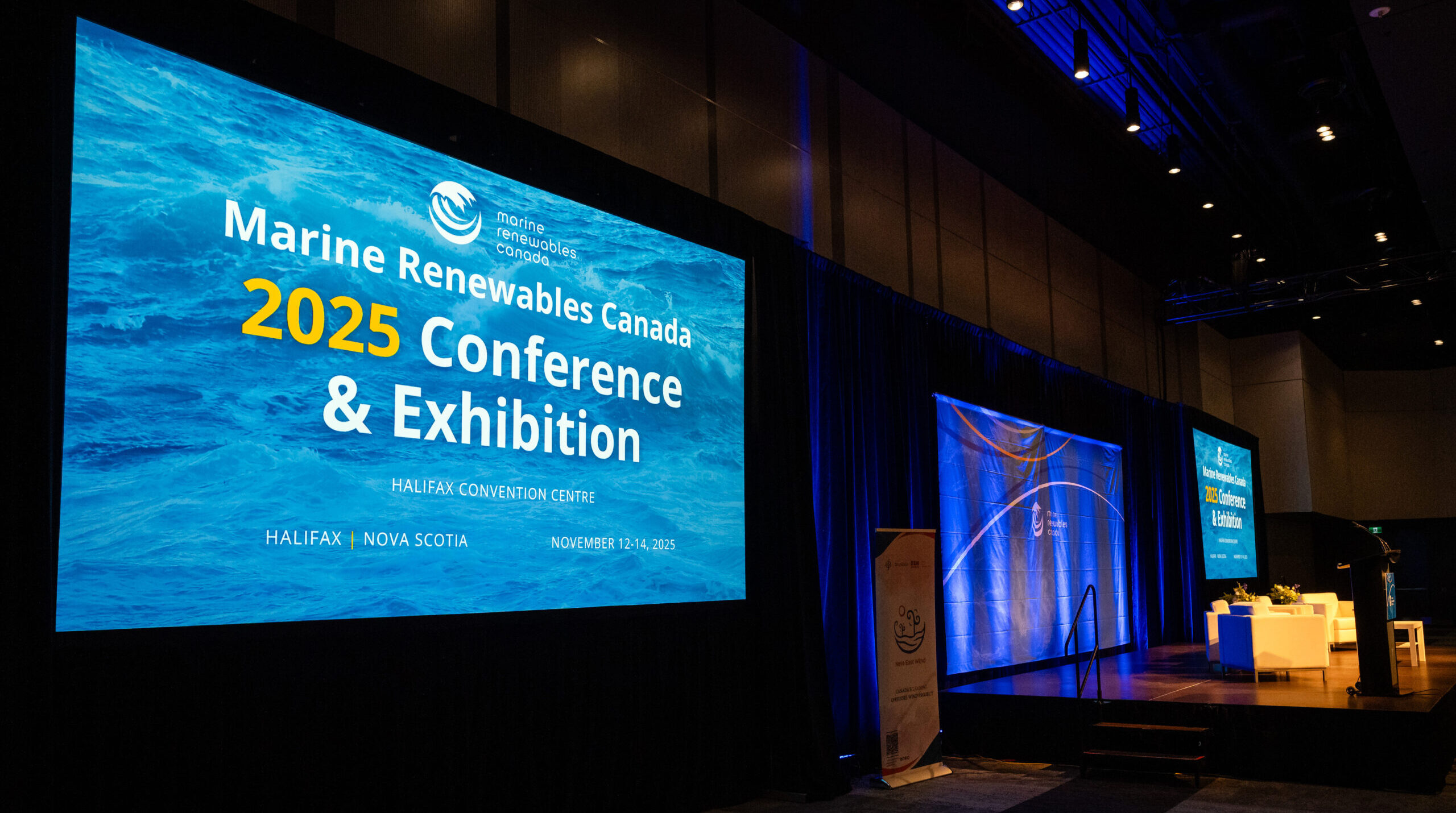
If there was one clear message coming out of the Marine Renewables Canada (MRC) 2025 Conference & Exhibition on November 12-14, in Halifax, it’s this: Canada’s marine renewable energy sector is done warming up. We’re no longer debating potential – we’re organizing for delivery.
With more than 700 delegates, 135 speakers (including 46 international experts), 33 sessions, and a sold-out exhibition floor that doubled in size year-over-year, MRC 2025 was the largest gathering of its kind in Canada. The “100% growth over 2024” statistic is impressive on paper, but what really mattered was the feel in the room: urgency, alignment, and a shared belief that the next phase is about building projects – not just talking about them.
Below are five big takeaways from the conference – and why they matter for anyone following offshore wind, tidal energy, river current and wave technologies, and the future of Canada’s clean power economy.
1. The conversation has shifted from “if” to “how fast”

Across policy panels, technical sessions, and industry roundtables, one theme was constant: the opportunity is real, and the question now is speed. Speakers zeroed in on grid integration and transmission as some of the biggest system bottlenecks. The sector is ready to move – but we need coordinated grid planning, early investment, and predictable offtake pathways to unlock large-scale development.
This isn’t a minor technical footnote. It’s the difference between pilot projects and a national industry. Getting the grid right – and doing it early – is how Canada competes globally.
2. Policy momentum is no longer theoretical
Government presence at MRC 2025 wasn’t ceremonial; it was directional. Premier Tim Houston and Minister Sean Fraser reaffirmed federal-provincial commitment to offshore wind and tidal energy. Their messages were clear: “Nova Scotia is ready to be Canada’s next energy powerhouse” (Tim Houston), and
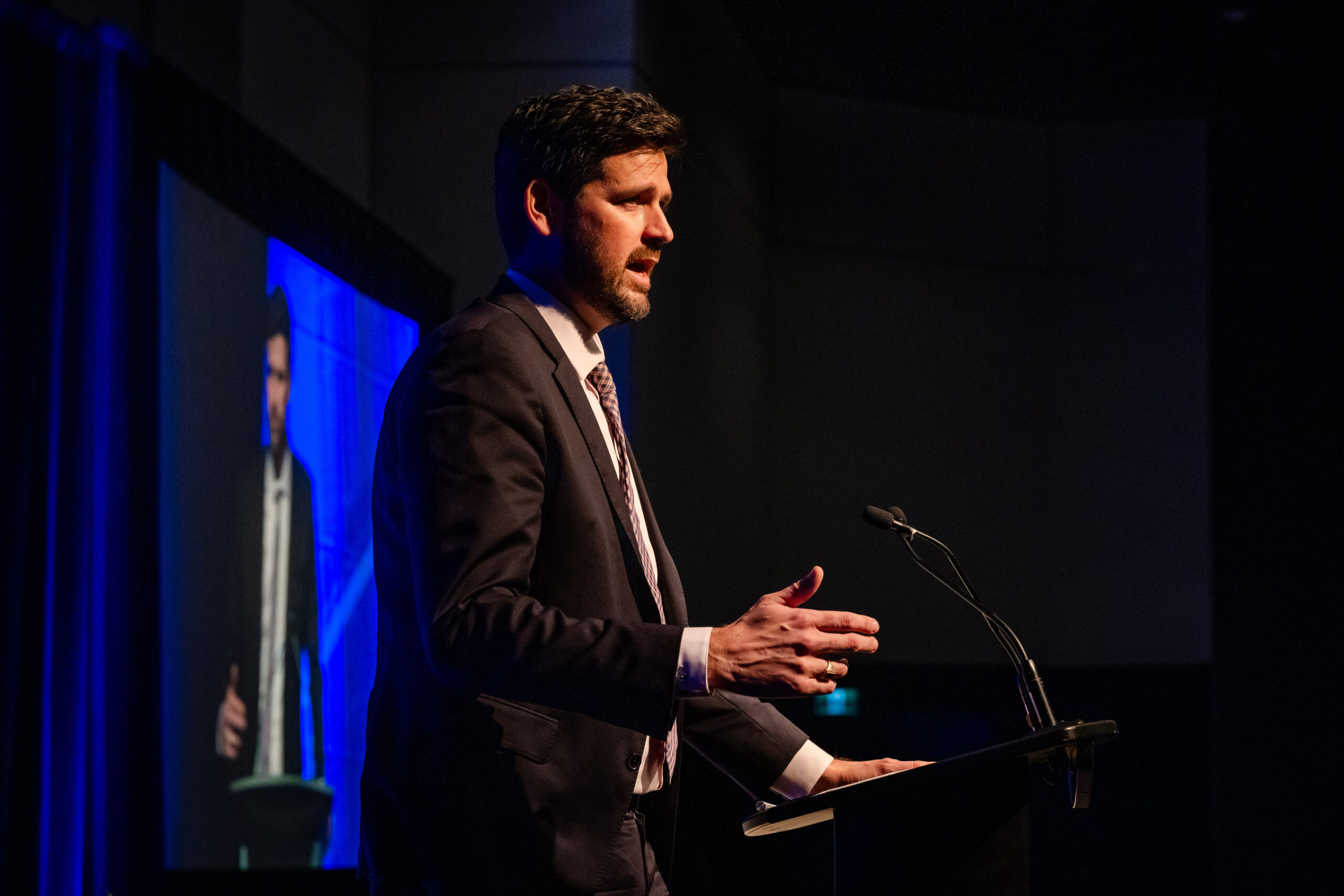
“In Atlantic Canada, we have the wind, the tides, the people, and the ambition to lead the clean energy future” (Sean Fraser).
But the subtext was just as important as the speeches: marine renewables are increasingly viewed not as a niche cleantech option, but as a core pillar for economic growth, decarbonization, and regional development. That shift in framing is what turns policy into market confidence.
3. Indigenous partnership is not an add-on-it’s foundational
 One of the most meaningful breakthroughs this year was the launch of the first-ever Indigenous Business Pavilion. Seven Indigenous businesses participated, and Indigenous-led panels offered real-world examples of shared-benefit approaches and values-driven project development.
The repeated message from Indigenous leaders and allies was clear: collaboration must be equitable, embedded from the start, and rooted in long-term partnership. The sector is listening – and more importantly, beginning to build that expectation into how projects are designed, permitted, and delivered.
4. Tidal energy just crossed a major regulatory milestone
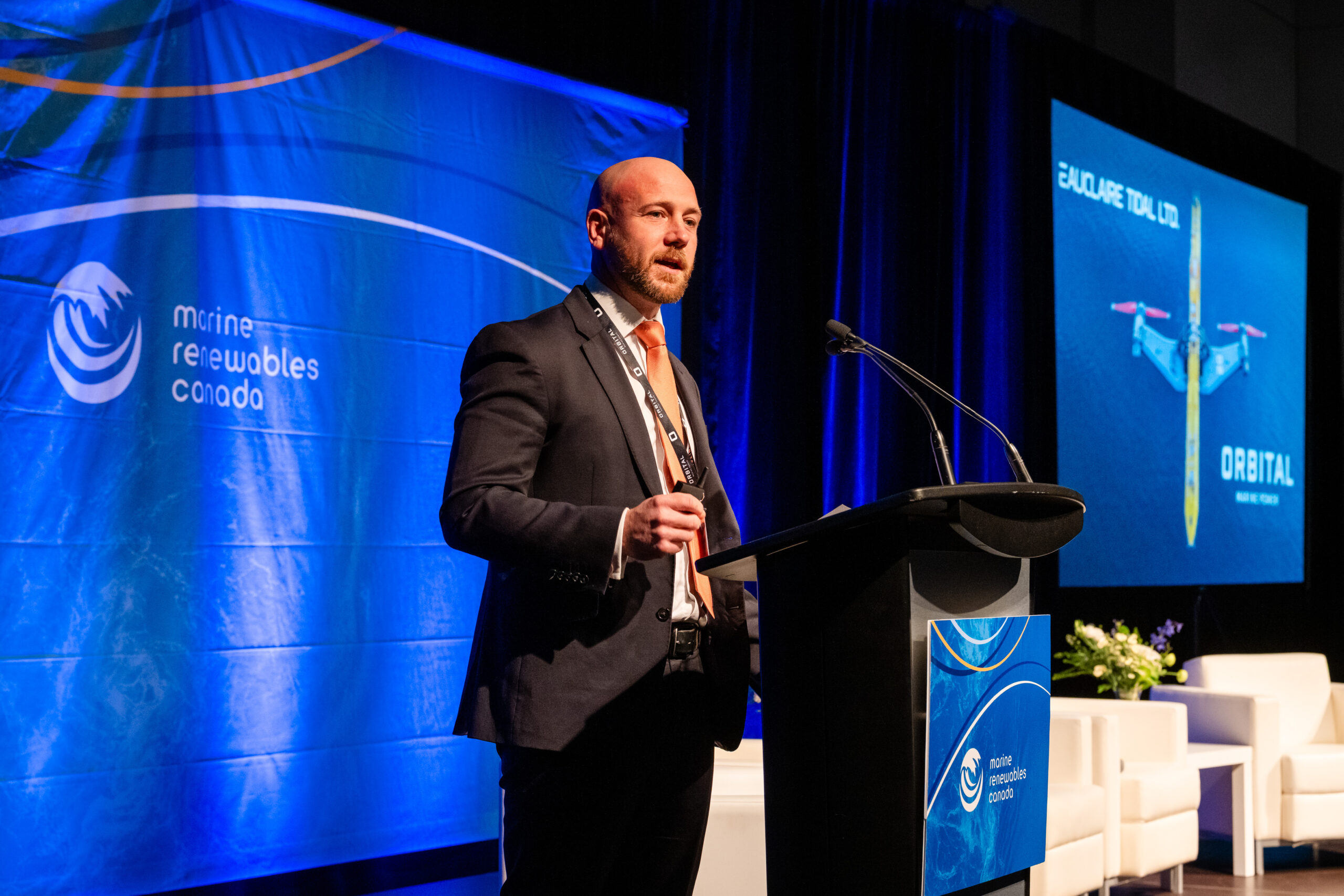
MRC 2025 wasn’t only about future ambition – it was the stage for real progress. A headline moment came with the announcement that Fisheries and Oceans Canada (DFO) issued a Fisheries Act Authorization to Eauclaire Tidal Ltd., allowing the company to deploy up to three Orbital Marine Power O2-X tidal energy devices at the Fundy Ocean Research Centre for Energy (FORCE). This is the first tidal project to advance under Canada’s revised, staged regulatory approach – an adaptive framework built to protect the marine environment while giving developers and investors a clearer, more predictable path to deployment.
That milestone signals something bigger than one project. It reflects years of coordinated policy work and suggests Canada is re-entering a phase where tidal energy can scale responsibly, predictably, and in partnership with other ocean users.
5. Ports, supply chains, and workforce readiness are rising fast
 Establishing a thriving marine renewables industry won’t happen without ports, fabrication, logistics, and skilled people. At MRC 2025, ports across Atlantic Canada showcased readiness and ambition, and the exhibition highlighted capabilities across tidal tech, offshore wind, R&D, manufacturing, and services.
Even more encouraging: the supply chain is no longer waiting on the sidelines. Canadian businesses and research institutions are gearing up, building experience, and positioning Canada for cross-border collaboration and commercialization.
What does this all mean?
Canada has the natural resource advantage, maritime expertise, and a growing coalition across governments, Indigenous communities, industry, ports, and research. The sector isn’t asking whether marine renewables belong in the energy mix anymore -it’s asking how to deliver them at the pace the moment demands.
The work ahead is still big: transmission planning, market frameworks, predictable permitting, and continued shared-ocean coordination with fisheries, conservation leaders, and coastal communities. But the alignment we saw in Halifax is exactly what deployment eras look like at the start.
See you in Ottawa for MRC 2026!
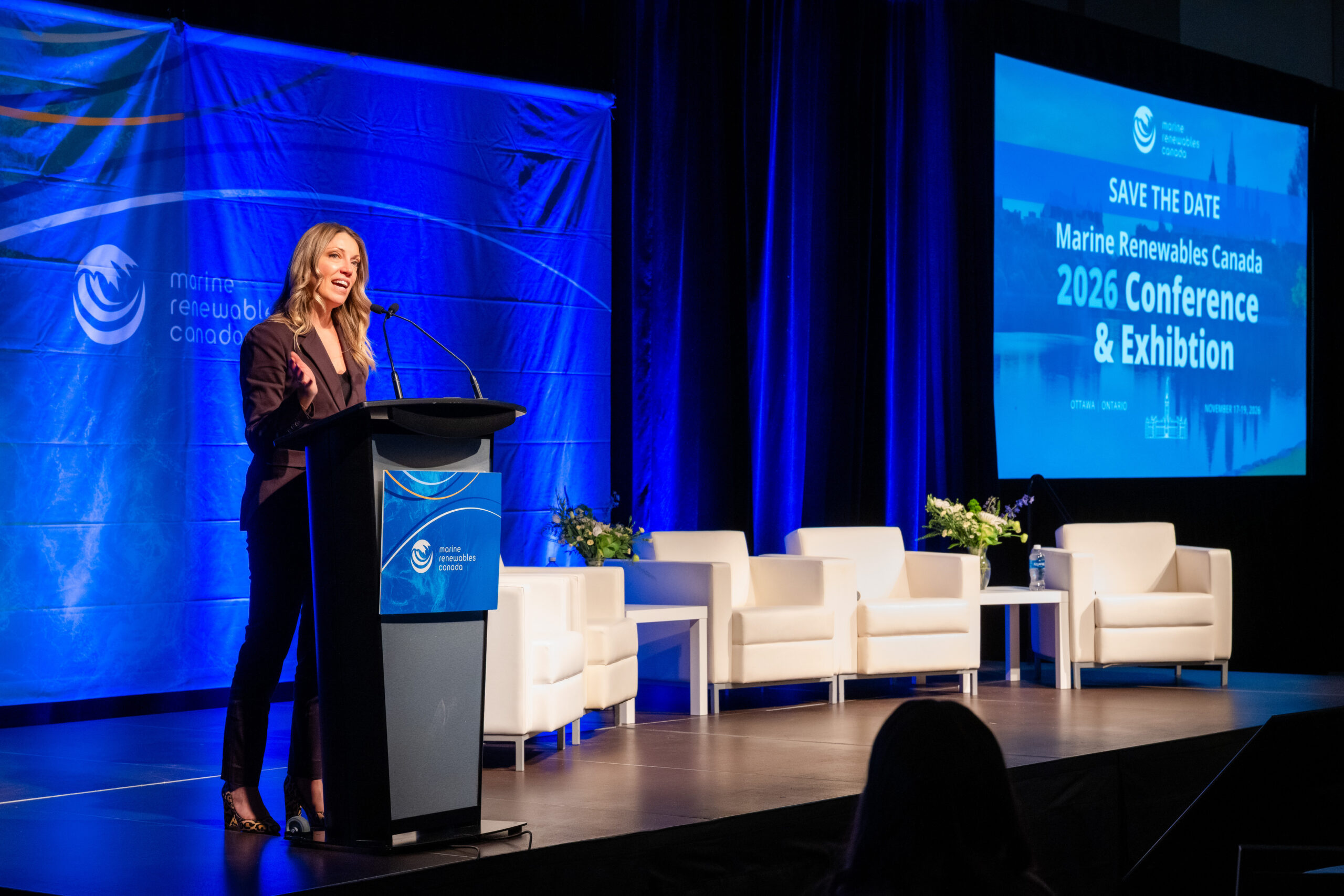
To everyone who spoke, exhibited, partnered, and participated – thank you for making MRC 2025 in Halifax a breakthrough event. The energy in the room matched the winds offshore – some of the strongest in the world.
We’re excited to keep that momentum going at MRC 2026 in Ottawa, November 17-19, 2026 – and to welcome the growing marine renewables community back together as the next wave of projects moves forward.
Full 2025 Conference highlights.
Follow us on LinkedIn for updates.